
HALOOV field guide 01
How to clean a horse stable: a practical 5-step routine
Remove the source first, wash from clean to dirty, respect the product label and let surfaces dry before fresh bedding returns.
The quick answer
A clean stable starts before water or product touches the wall.
Move the horse to a safe place, remove feed, water, bedding and portable equipment, then sweep or scrape away loose organic matter. Wash compatible surfaces with a stable-appropriate cleaner, work from higher and cleaner areas toward lower and dirtier ones, rinse where the label requires it, and allow the stable to dry completely before rebedding.
Routine cleaning removes dirt and organic material. Disinfection is a separate biosecurity step. If illness, an outbreak, a new arrival or a veterinary protocol requires disinfection, use an authorised disinfectant exactly as directed after cleaning.
Prepare the stable and protect the horse
Take the horse out before deep cleaning. Remove hay nets, feed bowls, water buckets, grooming tools, movable partitions and other equipment that could trap dirt or cleaner. Open doors and vents where practical.
- Check the cleaner label for dilution, contact time, ventilation and protective-equipment instructions.
- Confirm that walls, paint, sealants, metalwork and rubber are compatible before broad application.
- Keep products in their original labelled containers and never mix cleaners or disinfectants.
Remove bedding and dry organic matter
Muck out fully rather than washing debris into corners or drains. Lift wet patches, manure, loose feed, dust, cobwebs and hair. Scrape stubborn deposits with a surface-safe tool and sweep from the back of the stable toward the exit.
This dry-clean stage matters because organic material can shield microorganisms and consume cleaning chemistry. The official FEI stable-cleaning guidance likewise begins with removing bedding, fittings, matting and loose organic matter before wet cleaning.
Wash compatible surfaces systematically
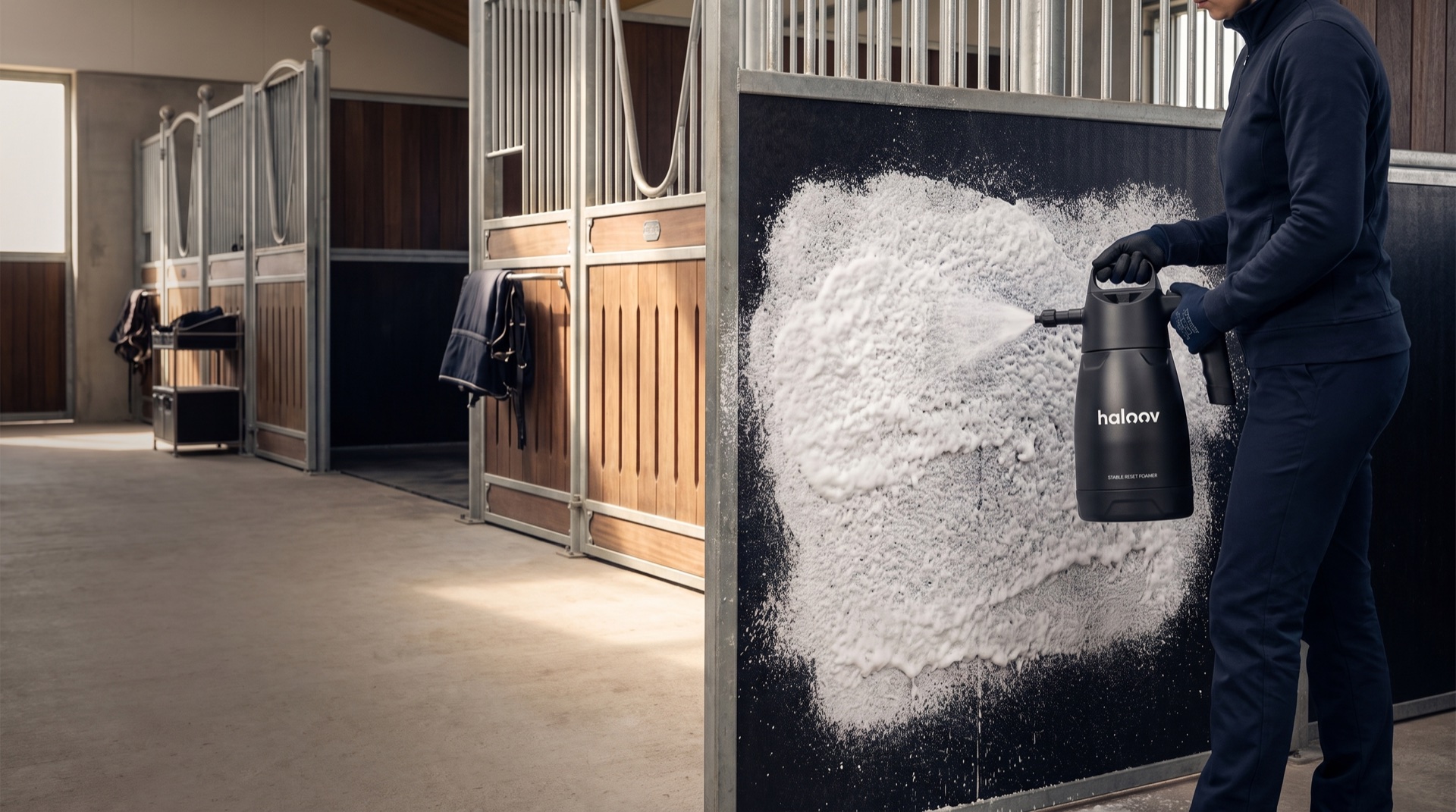
Pre-wet only if the product label or surface requires it. Apply the stable cleaner evenly and keep the area visibly covered for the confirmed label time. Start with upper walls and partitions, then work down toward kickboards and floors so dirty runoff does not re-soil finished areas.
Agitate textured or heavily marked areas with a suitable brush. High pressure is not always better: excessive pressure can aerosolise contamination, force water into joints or damage paint, timber and seals. Use the least aggressive method that achieves a clean result.
Rinse with clean water if directed. Do not describe a surface as sanitised or disinfected unless a product authorised for that purpose has been used according to its label.
Detail rubber mats, corners and equipment
Edges, mat joins, door tracks, drinker surrounds and low kickboards collect residues easily. Clean them deliberately rather than assuming runoff will do the work.
Rubber mats
Follow the mat manufacturer’s care instructions. If mats are designed to be lifted, remove them periodically and clean both the mat and the floor beneath. If they form a sealed system, avoid pulling them apart without the installer’s guidance. Rinse away product residue where required and inspect for curling edges or trapped moisture before the horse returns.
Feed and water equipment
Clean buckets, troughs and feed containers separately with products appropriate for food-contact or drinking-water equipment. Rinse thoroughly. Do not assume a stable-surface cleaner is suitable for every item.
Let the stable dry, inspect, then reset
Remove pooled water and allow surfaces, seams and the space beneath movable mats to dry. Good airflow helps, but never return a horse while a product label says the area must remain vacant.
Before rebedding, inspect the stable in good light. Check that residue, slippery areas, sharp edges and moisture traps are gone. Return clean, dry equipment; add fresh bedding; then record any maintenance issue that needs repair.
Know the difference
Routine cleaning and disinfection are not interchangeable.
Remove soil and residues
Used for regular stable care. It prepares surfaces and reduces the material that can interfere with later disinfection.
Follow a biosecurity protocol
Used when the risk requires it, after cleaning. Product authorisation, concentration, wet contact time and target organisms all matter.
If infectious disease is suspected, isolate the area and follow veterinary, yard-manager and local-authority guidance. A general web guide cannot replace a site-specific biosecurity plan.
Saveable checklist
Horse-stable deep-clean checklist
- Move the horse and secure the work area
- Read product and surface instructions
- Remove feed, water, equipment and bedding
- Scrape and sweep loose organic material
- Wash from high to low and clean to dirty
- Agitate corners, joins and marked areas
- Rinse if the product label requires it
- Clean equipment separately
- Dry surfaces and inspect the stable
- Return clean equipment and fresh bedding
How this guide was prepared
The HALOOV product team wrote this guide to separate universal preparation steps from product-specific instructions. It was checked against the FEI Knowledgebase document Cleaning and disinfecting stables. Final dilution, compatibility, contact time and safety instructions must always come from the product label and surface manufacturer.
Read HALOOV’s development standard or email corrections to hello@haloov.com.